

Why light matters more than dune height
At midday the sand can look flat because the sun reduces shadows. Early and late light creates strong contrast on the dune faces, revealing curves, ridges and texture. You do not need to climb the tallest dune for a dramatic photograph; a lower ridge with clean lines and side light often works better. Arrive before the best color so you have time to choose a foreground rather than rushing when the sun is already on the horizon.
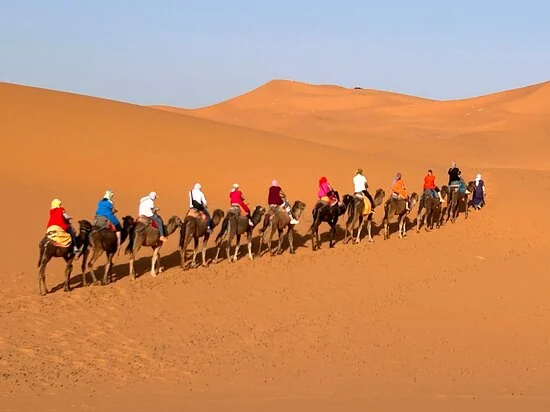
Photographing camels without making every frame the same
A caravan looks strongest when you give it space in the landscape. Instead of filling the frame with a camel, try a wider view where the line of animals follows a dune ridge. Silhouettes at sunset can be effective, but also photograph earlier when you still have color and detail in the people and saddles. Ask before taking close portraits of guides or other travelers.

Camp and night photography
Camp lanterns, tents and the blue hour after sunset create a different visual story from the dunes. For stars, stabilize the phone or camera, move away from bright camp lights and let your eyes adjust. A full moon can illuminate the dunes beautifully but reduces faint stars; a darker moon is better if the Milky Way is your priority.

Protecting cameras from sand
Fine sand gets into bags, lens rings and phone ports. Keep equipment zipped when you are not using it and avoid changing lenses in strong wind. A simple blower is useful later, but do not rub gritty sand across glass. For phones, a secure case and wrist strap help when riding a camel or standing on a steep slope.
Easy compositions that work
Look for a single ridge against the sky, repeated footprints, one person for scale, a camel caravan crossing diagonally, or shadows that form simple shapes. When the dunes are busy, step sideways rather than always walking higher. In Merzouga, the cleanest image is often only a few minutes away from the most crowded viewpoint.
How to fit this into your Merzouga stay
The dunes are most memorable when you experience more than one light condition. Late afternoon, sunset, night and early morning each make Erg Chebbi feel different, so leave some time unplanned.
A practical rule is to combine one signature dune experience with one contrasting activity and one relaxed period. That balance gives better photos, less fatigue and more room for weather or timing changes.
Related Merzouga guides
Want us to organize the desert part for you?
We can arrange a private Merzouga experience, camp stay, desert activities and private transport from Marrakech, Fes or Errachidia.
See 1-Night PackageSee 2-Night PackageRequest program & priceFrequently asked questions
Is sunrise or sunset better for photos?
Both are excellent. Sunrise is often quieter; sunset is easier to fit into arrival plans.
Do I need a professional camera?
No. Modern phones can produce excellent desert images with good light and composition.
How do I protect my camera from sand?
Keep it covered when not in use and avoid changing lenses in wind.
Can I use a drone?
Drone rules and permissions can change; verify current Moroccan regulations before traveling.
Where is the best photo spot?
There is no single best spot. Low ridges with clean lines and side light often beat crowded high dunes.
This guide is prepared for Merzouga Desert Package with practical planning experience from the Erg Chebbi area. Conditions and activity details can change, so confirm time-sensitive points for your travel dates.